Have you ever tried to take a deep breath and felt like your ribs won’t “drop,” like your chest stays lifted no matter how fully you exhale? That sensation can be frustrating, and it can make workouts, sleep, and even sitting at your desk feel harder than it should.
One commonly missed piece is rib flare. It’s not just a posture quirk. For many people, rib flare changes how the diaphragm, ribs, and mid-back work together, so breathing starts to feel like effort instead of something automatic. This is something posture-focused chiropractic practices like Family Chiropractic and Posture Center evaluate frequently.
What Rib Flare Really Is (and Why It Can Feel Tight or Stressful)
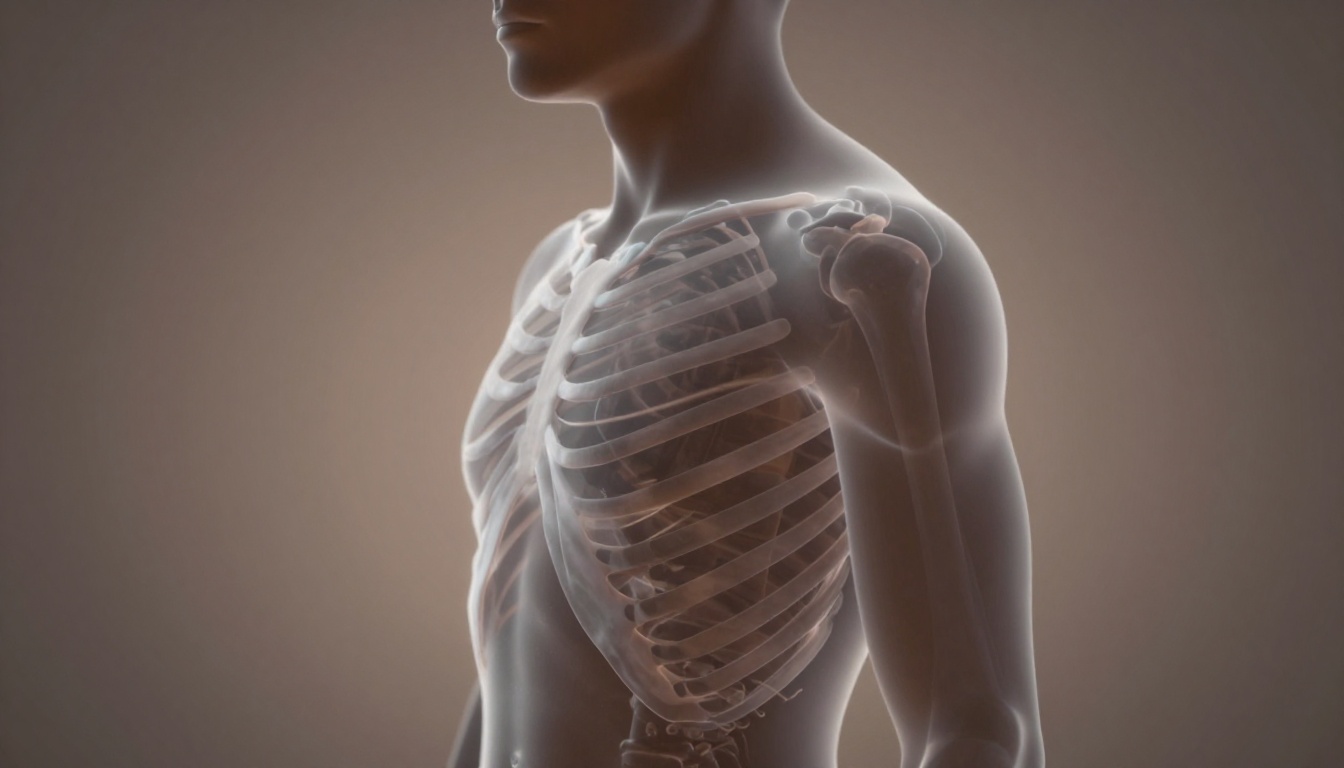
Rib flare means the lower front ribs angle up and forward more than they should at rest. Instead of the rib cage sitting “stacked” over the pelvis, the front of the rib cage tips up, and the belly often pushes forward. Some people notice it most in the mirror, others feel it as constant tightness under the bra line or along the upper abs.
Here’s the key idea: your rib cage is designed to move both ways. It expands when you inhale, but it also needs to come down and in when you exhale. If you live in a more “open” rib position all day, your body can lose that exhale position. The diaphragm still works, but from a less efficient starting point, like trying to close an umbrella that’s already bent.
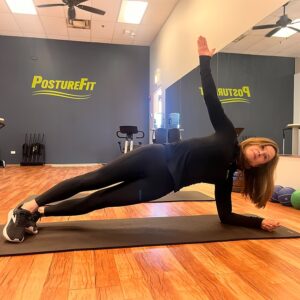
This pattern often shows up alongside broader posture challenges addressed through structured programs like PostureFit Active Care, which focus on restoring motion rather than forcing alignment.
Common Clues Rib Flare May Be Affecting Your Breathing
Rib flare doesn’t automatically mean something is “wrong” with you. It often means your system has adapted to sitting, driving, lifting, or even past injuries in ways that change rib and spine motion.
Common signs include:
-
You can inhale, but exhaling fully feels difficult
-
Upper chest breathing shows up quickly during stress or exercise
-
Neck and upper trap tightness builds throughout the day
-
Low back tension increases when you try to “sit up straight”
-
Core exercises feel awkward, and your ribs still pop up
These patterns often overlap with issues listed on conditions chiropractors treat, especially when posture and breathing mechanics aren’t addressed together.
How a Stiff Mid-Back Can Make Breathing Feel Restricted
Your mid-back (thoracic spine) is built for motion. It needs to extend, rotate, and side-bend so your ribs can glide and your lungs can expand in a smooth, 360-degree way.
When the thoracic spine stiffens, the rib cage usually stiffens with it. Because the ribs attach directly to the thoracic spine, limited motion here can make exhaling especially difficult. Over time, breathing starts to feel restricted even when lung capacity is normal.
This is one reason posture-aware chiropractic care often focuses on thoracic mobility as part of a breathing-friendly treatment plan.
The “Workaround” Breathing Pattern Your Body Adopts
When the mid-back and ribs don’t move well, your body still has to get air in. It compensates by recruiting muscles that weren’t meant to dominate breathing, such as the neck and upper chest muscles.
This often feels like:
-
Shallow breathing, even when you try to breathe deeply
-
Chest lifting without expansion into the sides or back
-
Frequent sighing or yawning to feel satisfied
-
Feeling wired or on edge, since breathing patterns affect the nervous system
A stiff mid-back can also nudge posture toward rib flare. Think of the rib cage like a bucket. If it tips forward and stays there, smooth down-and-in motion on exhale becomes harder. Many people then brace their abs, grip their back, or hold their breath without realizing it.
Why “Perfect Posture” Usually Makes Rib Flare Worse
Many people try to fix rib flare by forcing their ribs down or holding a military-style posture. That approach usually backfires. You may look straighter for a moment, but you’ll feel stiffer and your breathing becomes even more upper-chest dominant.
A better plan is restoring motion first, then building an easy breathing pattern on top of it. This approach aligns closely with prevention and wellness-focused care rather than rigid posture correction.
Simple At-Home Checks and Resets
A Quick Self-Check
Stand sideways in front of a mirror and relax. Notice where your ribs sit. If your lower ribs are lifted and your low back is arched, treat that as information, not a flaw.
Now try a slow exhale through pursed lips. If your ribs barely move down or your neck tightens, that’s a strong sign your body struggles to access a full exhale.
Two Gentle Resets to Try
1) Long-exhale reset (2 minutes)
Sit tall with your feet on the floor. Place one hand on your chest and the other on your lower ribs.
Inhale quietly through your nose for about three seconds.
Exhale slowly through your mouth for six to eight seconds, letting the ribs soften down.
Pause briefly and repeat.
2) Chair mid-back opener (about 60 seconds per side)
Sit sideways on a chair with your hands behind your head. Gently rotate your upper body over the backrest while breathing into your side ribs. You’re inviting motion, not forcing it.
If either drill causes sharp pain, dizziness, or significant breathlessness, stop and seek evaluation.
Where Chiropractic Care Fits When Mid-Back Stiffness Is the Driver
When rib flare is tied to thoracic stiffness, stretching alone often isn’t enough. Joint motion, rib motion, and nervous system tone all matter.
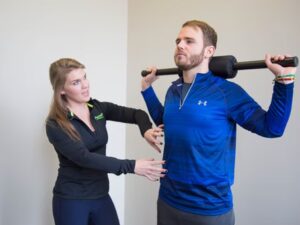
At Family Chiropractic and Posture Center, care is individualized, using different adjusting techniques based on comfort level and needs rather than a one-size approach. If you want a clear starting point, you can book a $49 comprehensive new patient exam that includes posture and movement evaluation.
You can also learn more about the posture-focused philosophy by visiting the Meet the Doctor page.
TL;DR / Key Takeaways
-
Rib flare isn’t just cosmetic; it can directly affect breathing efficiency
-
A stiff mid-back often limits rib motion, especially on exhale
-
Forced “perfect posture” usually worsens breathing patterns
-
Restoring thoracic and rib motion is often the first step toward easier breathing
-
A posture-focused chiropractic exam can clarify whether mid-back stiffness is the root issue